| Title | Science and Technology for Energy Transition (STET) |
| Standard Abbreviation | Sci. Technol. Energy Transit. (STET) |
| Type of Publication | Journal |
| Discipline | Chemical Engineering (miscellaneous) (Q2); Energy Engineering and Power Technology (Q2); Fuel Technology (Q2) |
| Impact Score | 3.42 |
| SCImago Journal Rank (SJR) | 0.535 |
| h-index | 81 |
| Overall Rank | 11139 |
| Publisher Name | Editions Technip |
| Publication Country | France |
| International Standard Serial Number (ISSN) | 28047699 |
| Coverage and History | 2022-2026 |
| Best Quartile | Q2 |
| Total Citations Received (Last 3 Year) |
510 |
Science and Technology for Energy Transition (STET) is a journal published by Editions Technip. This journal covers the area[s] related to Chemical Engineering (miscellaneous), Energy Engineering and Power Technology, Fuel Technology, etc.
The coverage history of this journal is as follows: 2022-2026.
The rank of this journal is 11139. This journal's impact score, h-index, and SJR are 3.42, 81, and 0.535, respectively. The ISSN of this journal is/are as follows: 28047699.
The best quartile of Science and Technology for Energy Transition (STET) is Q2.
This journal has received a total of 510 citations during the last three years (Preceding 2025).
The latest impact score (IS) of the Science and Technology for Energy Transition (STET) is 3.42. It is computed in the year 2026 as per its definition and based on Scopus data.
3.42
It is increased by a factor of around 1.2, and the percentage change is 54.05% compared to the preceding year 2024, indicating a rising trend.
The impact score (IS), also denoted as the Journal impact score (JIS), of an academic journal is a measure of the yearly average number of citations to recent articles published in that journal. It is based on Scopus data.
Impact Score 2025 of Science and Technology for Energy Transition (STET) is 3.42. If a similar upward trend continues, IS may increase in 2026 as well.
| Year | Impact Score (IS) |
|---|---|
| 2026/2027 | Coming Soon |
| 2025 | 3.42 |
| 2024 | 2.22 |
| 2023 | 1.82 |
| 2022 | 1.61 |
| 2021 | 2.31 |
| 2020 | 1.84 |
| 2019 | 1.50 |
| 2018 | 2.32 |
| 2017 | 1.66 |
| 2016 | 1.29 |
| 2015 | 1.04 |
| 2014 | 1.00 |
The h-index of Science and Technology for Energy Transition (STET) is 81. By definition of the h-index, this journal has at least 81 published articles with more than 81 citations.
The h-index (also known as the Hirsch index or Hirsh index) is a scientometric parameter used to evaluate the scientific impact of the publications and journals. It is defined as the maximum value of h such that the given Journal has published at least h papers and each has at least h citations.
The International Standard Serial Number (ISSN) of Science and Technology for Energy Transition (STET) is/are as follows: 28047699.
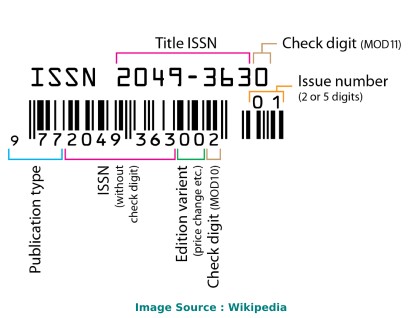
The ISSN is a unique 8-digit identifier for a specific publication like Magazine or Journal. The ISSN is used in the postal system and in the publishing world to identify the articles that are published in journals, magazines, newsletters, etc. This is the number assigned to your article by the publisher, and it is the one you will use to reference your article within the library catalogues.
ISSN code (also called as "ISSN structure" or "ISSN syntax") can be expressed as follows: NNNN-NNNC
Here, N is in the set {0,1,2,3...,9}, a digit character, and C is in {0,1,2,3,...,9,X}
The Science and Technology for Energy Transition (STET) is ranked 11139 among 27955 Journals, Conferences, and Book Series.
As per SJR, this journal is ranked 0.535.
SCImago Journal Rank is an indicator, which measures the scientific influence of journals. It considers the number of citations received by a journal and the importance of the journals from where these citations come.
The publisher of Science and Technology for Energy Transition (STET) is Editions Technip. The publishing house of this journal is located in the France. Its coverage history is as follows: 2022-2026.
Please check the official website of this journal to find out the complete details and Call For Papers (CFPs).
The International Organization for Standardization 4 (ISO 4) abbreviation of Science and Technology for Energy Transition (STET) is Sci. Technol. Energy Transit. (STET). ISO 4 is an international standard which defines a uniform and consistent system for the abbreviation of serial publication titles, which are published regularly. The primary use of ISO 4 is to abbreviate or shorten the names of scientific journals using the technique of List of Title Word Abbreviations (LTWA).
As ISO 4 is an international standard, the abbreviation ('Sci. Technol. Energy Transit. (STET)') can be used for citing, indexing, abstraction, and referencing purposes.
If your area of research or discipline is related to Chemical Engineering (miscellaneous), Energy Engineering and Power Technology, Fuel Technology, etc., please check the journal's official website to understand the complete publication process.
There are several factors that influence the acceptance rate of any academic journal. Here are some critical parameters that are considered while calculating the acceptance rate:
The simplest way to find out the acceptance rate or rejection rate of a Journal/Conference is to check with the journal's/conference's editorial team through emails or through the official website.
The latest impact score of Science and Technology for Energy Transition (STET) is 3.42. It is computed in the year 2026.
The latest h-index of Science and Technology for Energy Transition (STET) is 81. It is evaluated in the year 2026.
The latest SCImago Journal Rank (SJR) of Science and Technology for Energy Transition (STET) is 0.535. It is calculated in the year 2026.
The latest ranking of Science and Technology for Energy Transition (STET) is 11139. This ranking is among 27955 Journals, Conferences, and Book Series. It is computed in the year 2026.
Science and Technology for Energy Transition (STET) is published by Editions Technip. The publication country of this journal is France.
This standard abbreviation of Science and Technology for Energy Transition (STET) is Sci. Technol. Energy Transit. (STET).
Science and Technology for Energy Transition (STET) is a journal published by Editions Technip.
The scope of Science and Technology for Energy Transition (STET) is as follows:
For detailed scope of Science and Technology for Energy Transition (STET), check the official website of this journal.
The International Standard Serial Number (ISSN) of Science and Technology for Energy Transition (STET) is/are as follows: 28047699.
The best quartile for Science and Technology for Energy Transition (STET) is Q2.
The coverage history of Science and Technology for Energy Transition (STET) is as follows 2022-2026.
Note: The impact score shown here is equivalent to the average number of times documents published in a journal/conference in the past two years have been cited in the current year (i.e., Cites / Doc. (2 years)). It is based on Scopus data and can be a little higher or different compared to the impact factor (IF) produced by Journal Citation Report. Please refer to the Web of Science data source to check the exact journal impact factor ™ (Thomson Reuters) metric.
| Journal/Conference/Book Title | Type | Publisher | Ranking | SJR | h-index | Impact Score |
|---|---|---|---|---|---|---|
| Proceedings of the ASME Turbo Expo | Conference And Proceedings | 17577 | 54 | 0.00 | ||
| CESifo Economic Studies | Journal | Oxford University Press | 18952 | 38 | 0.73 | |
| Milan Journal of Mathematics | Journal | Springer International Publishing | 10710 | 32 | 0.61 | |
| Journal of Business Finance and Accounting | Journal | Wiley-Blackwell Publishing Ltd | 3624 | 102 | 3.81 | |
| Journal of International Financial Management and Accounting | Journal | Wiley-Blackwell Publishing Ltd | 2078 | 55 | 6.94 | |
| Entrepreneurship Theory and Practice | Journal | SAGE Publications Ltd | 232 | 224 | 12.12 | |
| Mathematical Modelling and Analysis | Journal | Vilnius Gediminas Technical University | 11805 | 33 | 1.90 | |
| International Journal of Parallel, Emergent and Distributed Systems | Journal | Taylor and Francis Ltd. | 19086 | 29 | 1.26 | |
| Modern Language Journal | Journal | Wiley-Blackwell | 1308 | 131 | 4.80 | |
| Syntax | Journal | Wiley-Blackwell Publishing Ltd | 8098 | 37 | 0.80 |
| Year | Impact Score (IS) |
|---|---|
| 2026/2027 | Updated Soon |
| 2025 | 3.42 |
| 2024 | 2.22 |
| 2023 | 1.82 |
| 2022 | 1.61 |
| 2021 | 2.31 |
| 2020 | 1.84 |
| 2019 | 1.50 |
| 2018 | 2.32 |
| 2017 | 1.66 |
| 2016 | 1.29 |
| 2015 | 1.04 |
| 2014 | 1.00 |
 3.42
 0.535
 81
 11139