| Title | Environmental Humanities |
| Standard Abbreviation | Environ. Humanit. |
| Type of Publication | Journal |
| Discipline | Anthropology (Q1); Ecology (Q1); Environmental Science (miscellaneous) (Q1); Social Sciences (miscellaneous) (Q1) |
| Impact Score | 2.08 |
| SCImago Journal Rank (SJR) | 1.072 |
| h-index | 24 |
| Overall Rank | 4367 |
| Publisher Name | Duke University Press |
| Publication Country | United States |
| International Standard Serial Number (ISSN) | 22011919 |
| Coverage and History | 2012-2026 |
| Best Quartile | Q1 |
| Total Citations Received (Last 3 Year) |
328 |
Environmental Humanities is a journal published by Duke University Press. This journal covers the area[s] related to Anthropology, Ecology, Environmental Science (miscellaneous), Social Sciences (miscellaneous), etc.
The coverage history of this journal is as follows: 2012-2026.
The rank of this journal is 4367. This journal's impact score, h-index, and SJR are 2.08, 24, and 1.072, respectively. The ISSN of this journal is/are as follows: 22011919.
The best quartile of Environmental Humanities is Q1.
This journal has received a total of 328 citations during the last three years (Preceding 2025).
The latest impact score (IS) of the Environmental Humanities is 2.08. It is computed in the year 2026 as per its definition and based on Scopus data.
2.08
It is increased by a factor of around 0.26, and the percentage change is 14.29% compared to the preceding year 2024, indicating a rising trend.
The impact score (IS), also denoted as the Journal impact score (JIS), of an academic journal is a measure of the yearly average number of citations to recent articles published in that journal. It is based on Scopus data.
Impact Score 2025 of Environmental Humanities is 2.08. If a similar upward trend continues, IS may increase in 2026 as well.
| Year | Impact Score (IS) |
|---|---|
| 2026/2027 | Coming Soon |
| 2025 | 2.08 |
| 2024 | 1.82 |
| 2023 | 1.24 |
| 2022 | 2.30 |
| 2021 | 1.30 |
| 2020 | 1.70 |
| 2019 | 1.13 |
| 2018 | 0.00 |
The h-index of Environmental Humanities is 24. By definition of the h-index, this journal has at least 24 published articles with more than 24 citations.
The h-index (also known as the Hirsch index or Hirsh index) is a scientometric parameter used to evaluate the scientific impact of the publications and journals. It is defined as the maximum value of h such that the given Journal has published at least h papers and each has at least h citations.
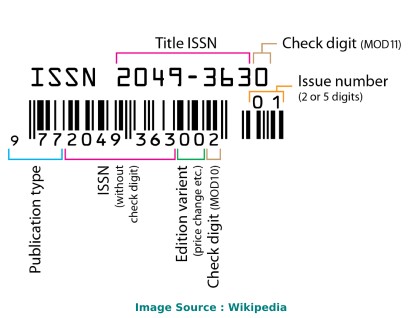
The International Standard Serial Number (ISSN) of Environmental Humanities is/are as follows: 22011919.
The ISSN is a unique 8-digit identifier for a specific publication like Magazine or Journal. The ISSN is used in the postal system and in the publishing world to identify the articles that are published in journals, magazines, newsletters, etc. This is the number assigned to your article by the publisher, and it is the one you will use to reference your article within the library catalogues.
ISSN code (also called as "ISSN structure" or "ISSN syntax") can be expressed as follows: NNNN-NNNC
Here, N is in the set {0,1,2,3...,9}, a digit character, and C is in {0,1,2,3,...,9,X}
The Environmental Humanities is ranked 4367 among 27955 Journals, Conferences, and Book Series.
As per SJR, this journal is ranked 1.072.
SCImago Journal Rank is an indicator, which measures the scientific influence of journals. It considers the number of citations received by a journal and the importance of the journals from where these citations come.
The publisher of Environmental Humanities is Duke University Press. The publishing house of this journal is located in the United States. Its coverage history is as follows: 2012-2026.
Please check the official website of this journal to find out the complete details and Call For Papers (CFPs).
The International Organization for Standardization 4 (ISO 4) abbreviation of Environmental Humanities is Environ. Humanit.. ISO 4 is an international standard which defines a uniform and consistent system for the abbreviation of serial publication titles, which are published regularly. The primary use of ISO 4 is to abbreviate or shorten the names of scientific journals using the technique of List of Title Word Abbreviations (LTWA).
As ISO 4 is an international standard, the abbreviation ('Environ. Humanit.') can be used for citing, indexing, abstraction, and referencing purposes.
If your area of research or discipline is related to Anthropology, Ecology, Environmental Science (miscellaneous), Social Sciences (miscellaneous), etc., please check the journal's official website to understand the complete publication process.
There are several factors that influence the acceptance rate of any academic journal. Here are some critical parameters that are considered while calculating the acceptance rate:
The simplest way to find out the acceptance rate or rejection rate of a Journal/Conference is to check with the journal's/conference's editorial team through emails or through the official website.
The latest impact score of Environmental Humanities is 2.08. It is computed in the year 2026.
The latest h-index of Environmental Humanities is 24. It is evaluated in the year 2026.
The latest SCImago Journal Rank (SJR) of Environmental Humanities is 1.072. It is calculated in the year 2026.
The latest ranking of Environmental Humanities is 4367. This ranking is among 27955 Journals, Conferences, and Book Series. It is computed in the year 2026.
Environmental Humanities is published by Duke University Press. The publication country of this journal is United States.
This standard abbreviation of Environmental Humanities is Environ. Humanit..
Environmental Humanities is a journal published by Duke University Press.
The scope of Environmental Humanities is as follows:
For detailed scope of Environmental Humanities, check the official website of this journal.
The International Standard Serial Number (ISSN) of Environmental Humanities is/are as follows: 22011919.
The best quartile for Environmental Humanities is Q1.
The coverage history of Environmental Humanities is as follows 2012-2026.
Note: The impact score shown here is equivalent to the average number of times documents published in a journal/conference in the past two years have been cited in the current year (i.e., Cites / Doc. (2 years)). It is based on Scopus data and can be a little higher or different compared to the impact factor (IF) produced by Journal Citation Report. Please refer to the Web of Science data source to check the exact journal impact factor ™ (Thomson Reuters) metric.
| Journal/Conference/Book Title | Type | Publisher | Ranking | SJR | h-index | Impact Score |
|---|---|---|---|---|---|---|
| Journal of Field Archaeology | Journal | Maney Publishing | 7503 | 50 | 1.36 | |
| Entrepreneurship Theory and Practice | Journal | SAGE Publications Ltd | 232 | 224 | 12.12 | |
| Child and Family Social Work | Journal | Wiley-Blackwell Publishing Ltd | 8813 | 81 | 2.26 | |
| Abacus | Journal | Wiley-Blackwell Publishing Ltd | 7390 | 60 | 3.20 | |
| European Journal of Education | Journal | Wiley-Blackwell Publishing Ltd | 3214 | 72 | 5.10 | |
| Natural Solutions | Trade Journal | Innovision Health Media | 28581 | 1 | 0.00 | |
| Oral Radiology | Journal | Springer Japan | 10403 | 32 | 2.54 | |
| Journal of Immigrant and Refugee Studies | Journal | Routledge | 6886 | 43 | 2.41 | |
| Cuadernos de historia (Santiago, Chile) | Journal | Universidad de Chile, Facultad de Filosofia y Humanidades, Departamento de Literatura | 21970 | 8 | 0.43 | |
| Integrative Psychological and Behavioral Science | Journal | Springer New York | 9983 | 48 | 1.81 |
| Year | Impact Score (IS) |
|---|---|
| 2026/2027 | Updated Soon |
| 2025 | 2.08 |
| 2024 | 1.82 |
| 2023 | 1.24 |
| 2022 | 2.30 |
| 2021 | 1.30 |
| 2020 | 1.70 |
| 2019 | 1.13 |
| 2018 | 0.00 |
 2.08
 1.072
 24
 4367